
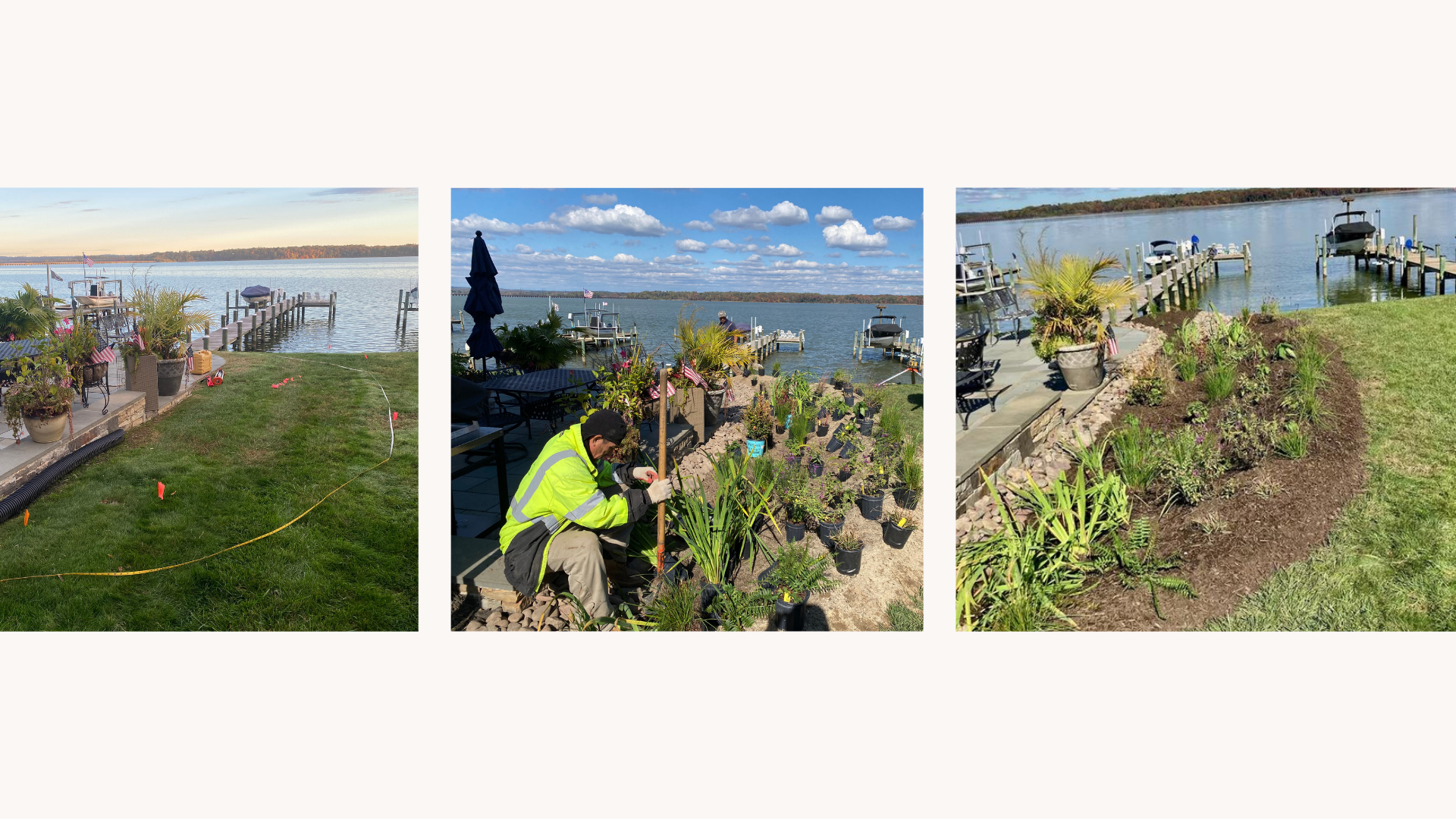
Do you have a stormwater issue? Consider a rain garden.
There’s a lot of love these days for native plants and rightfully so! Native plants are beautiful, require less maintenance, and provide habitat for native wildlife. Here at Gunpowder Valley Conservancy (GVC) we design rain gardens that feature native plants AND filter stormwater runoff—a leading source of pollution to the Chesapeake Bay. Best of all, GVC has grant funding—between 70 – 80% of total project costs—to provide significant savings for homeowners, businesses, and community organizations within the Gunpowder Watershed.
Ebram Victoria, GVC Director of Ecological Restoration and Design, shares his perspective on the process of creating a GVC Rain Garden.
Building a rain garden takes patience, but the outcome is always worth it. The look on a client’s face when they see their previously ordinary lawn transformed into a vibrant living piece of art is priceless. Not only is the garden beautiful, it also provides an important function resolving stormwater issues.
Rain gardens are gardens with a purpose. They are masters of intercepting runoff and reducing flooding. They slow down surface water, improve water quality, recharge aquifers, and provide habitat for native birds, bees, and butterflies.
Once someone fills out the garden interest form, we conduct a preliminary desktop assessment to understand the soils and topography. How easily water drains through soils and flows across the landscape influences the design process. Next, comes the site visit with the client to discuss their goals and areas of interest. After that, we calculate the amount of water flowing into the rain garden to determine the garden size needed to treat the flow. From there, we create a planting plan to accommodate the site conditions and client preferences.
No two gardens are the same! We consider the plants’ color, texture, height, moisture needs, and spacing to propose a design perfect for the space. The last step is installation, which requires careful administration to ensure elevations are set so that water can enter, temporarily pond, and exit the garden when needed. The river stone, soil amendments, native plants, and mulch complete the garden, and a satisfied client completes the project.
Building rain gardens is akin to making good music. You need to set a tempo, find a rhythm, harmonize the sounds, and create a melody. GVC brings these elements together—by reading the land and incorporating the right plants—so that homeowners can take a seat and enjoy.
GVC would love to orchestrate something incredible for you!
- Interested in receiving a free garden assessment? Please fill out our rain garden interest form
- Want to learn more? You can now watch our webinar, “Address Stormwater in Your Backyard with Conservation Gardens” in the comfort of your home. Thank you, Harford Land Trust, for inviting us to talk with your Grow Wild Harford community in November 2025.